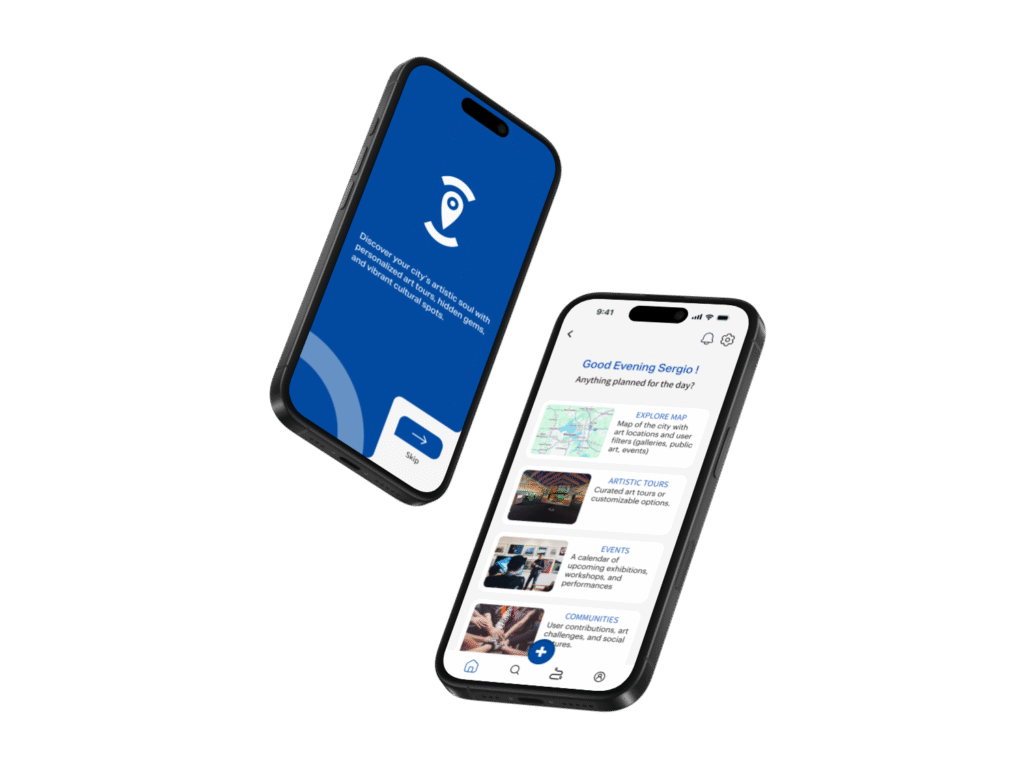
ArtExplorer guides you to hidden art throughout the city with a simple, GPS-powered map. It curates routes based on your interests and time, helping you discover galleries, studios, and murals you might otherwise miss. Each journey connects you with the creators behind the work, turning every walk into a cultural experience.
Designer
Pondikpa ADOUNA
Tools used
Figma, Microsoft Forms
Role
UX/UI Designer
ArtExplorer was born from a simple insight: travelers shouldn’t have to hunt for local art; they should be guided to it. Over the semester, I built a solution that pinpoints galleries, murals, and hidden gems instantly. This case study walks through how we crafted an experience that uses GPS precision and curated tours to turn any city into an accessible art adventure.
An overview of the process of this project which involve different stages including the design thinking.

Visiting a new city often presents the exciting prospect of exploring its vibrant cultural offerings, including local art galleries and street art scenes. However, navigating these artistic landmarks can quickly become a daunting task, especially for travelers unfamiliar with the city’s layout. Without proper guidance, individuals may miss out on hidden gems tucked away in alleyways or off-the-beaten-path galleries. This challenge not only diminishes the overall experience for art enthusiasts but also hinders their ability to fully immerse themselves in the city’s creative atmosphere.
We needed clearer insight into how people discover art, what they expect from exploration apps, where existing tools fall short, and whether GPS-driven navigation could genuinely improve the experience.
– Travelers struggle to find galleries, murals, and studios in unfamiliar cities.
– Navigation, user needs, and technical constraints would shape the solution.
What We Wanted to Learn
– How users currently discover art and what frustrates them.
– What competing apps do well (or poorly).
– Whether precise GPS routing could meaningfully improve the experience.
– Define specific questions or areas where further information or research is needed.
– Explore user preferences and behaviors related to art exploration apps.
– Investigate existing solutions or competitors in the market to understand strengths, weaknesses, and opportunities for differentiation.
– Determine the feasibility and implications of integrating GPS technology into the app for navigation.
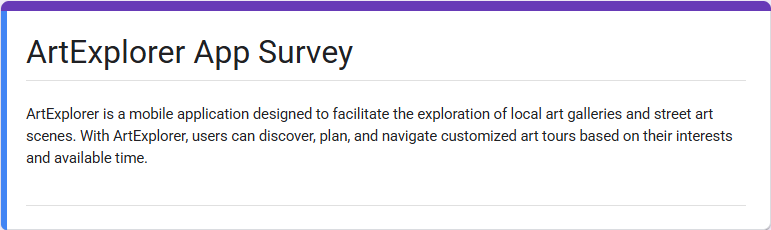
We have conducted a screener survey through Google Forms to gather more information about the users and their preferences.
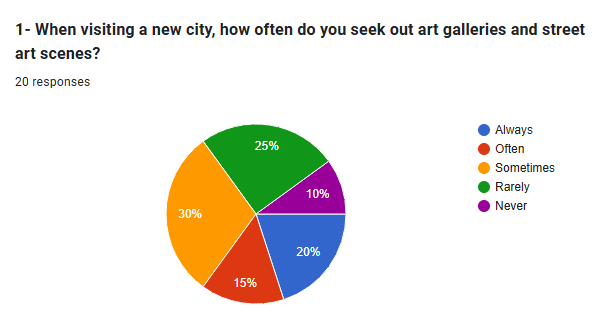
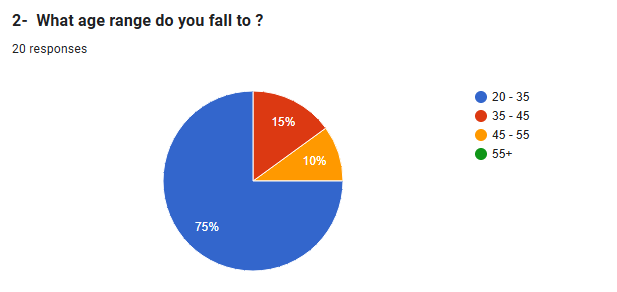
Art Seekers Are Active, but Not Always Prepared
65% seek out art often or sometimes when visiting new cities.
Majority are 20–35 years old (75%), making young adults a key audience.
Interest in Art Exists, But It’s Unstructured
60% follow local artists or events.
Top interests: Paintings (60%), Photography (26.7%), Street Art (13.3%).
Most describe themselves as:
“Like art but don’t know much” (50%)
or art appreciators (15%), not experts.
Discovery Methods Are Clumsy & Time-Consuming
50% rely on online research.
25% wander randomly.
Only 10% use travel guides/apps, signaling a gap in the market.
Biggest Pain Points Confirmed the Problem
Lack of reliable info (45%)
Difficulty navigating unfamiliar streets (40%)
Limited time to explore (30%)
Uncertainty about art quality, language barriers, and frustration with planning were all recurring issues.
Planning Ahead Isn’t Common
Only 20% are very likely to plan visits in advance;
30% are very unlikely, proving the need for an instant, on-the-go discovery tool.
To keep the experience focused and valuable from day one, we defined a clear MVP built around the core needs of art explorers. Each feature directly tied to a user story uncovered during research.
Core Features & User Goals
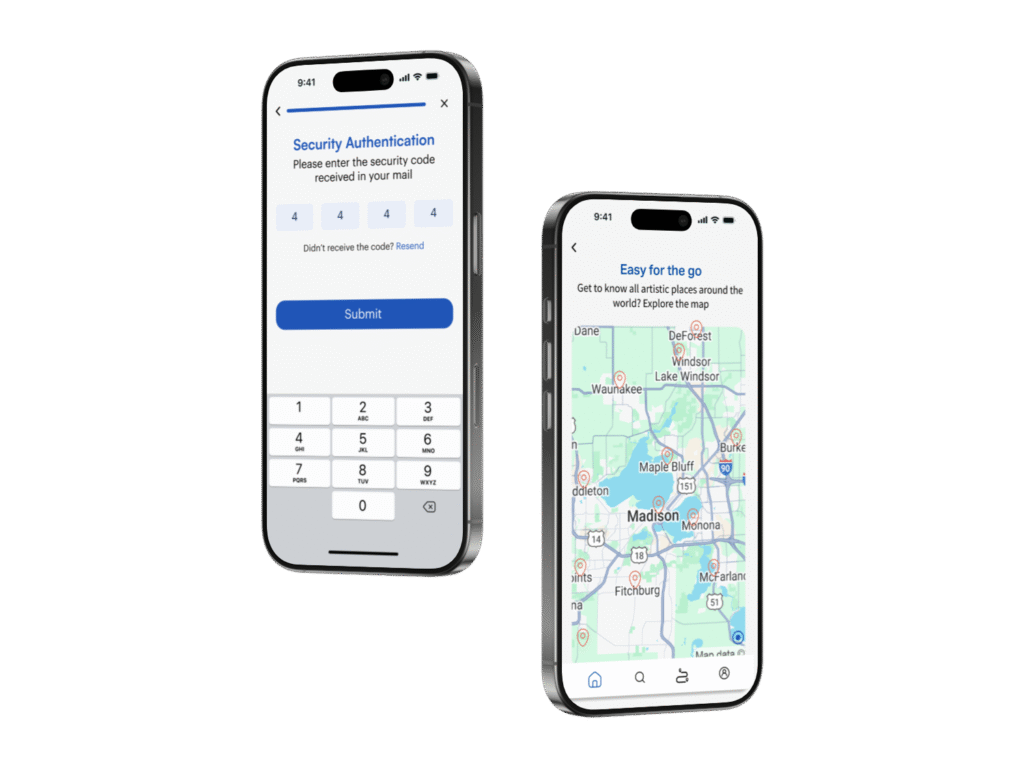
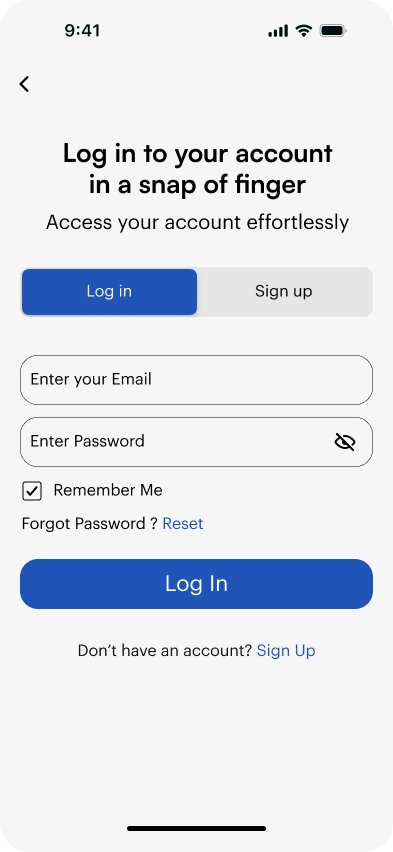
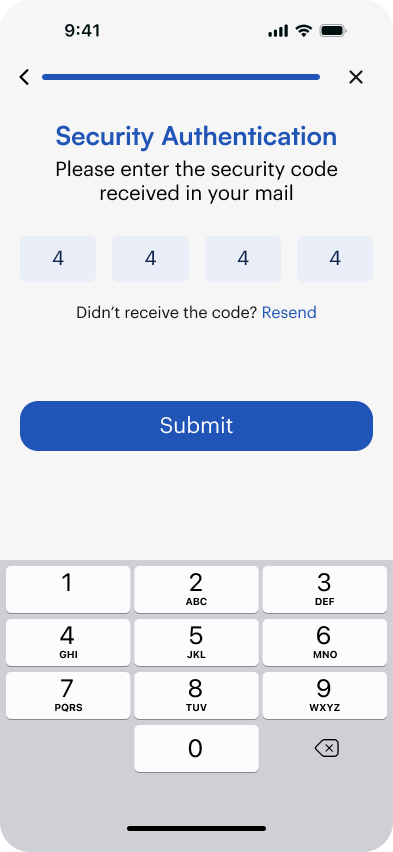
Sign Up / Log In
Users needed a fast, secure way to get started and protect their data.
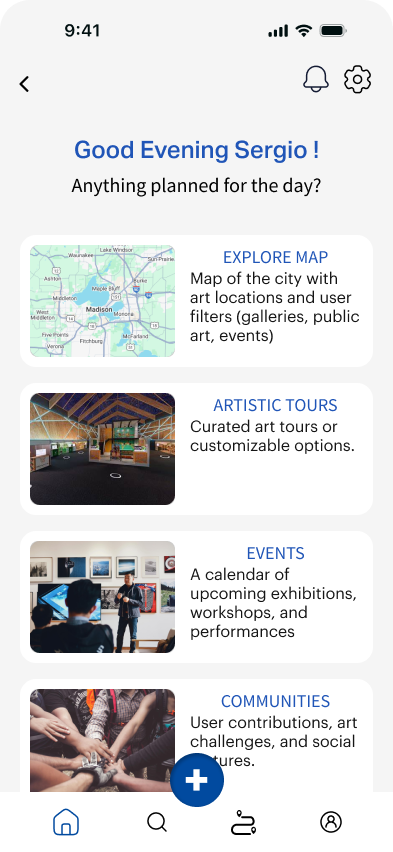
Map-Based Discovery
The heart of the app: a clean, GPS-powered map helping users quickly find galleries, murals, and art installations nearby.
Gallery Details
Users wanted reliable info location, hours, art style, photos, and reviews to decide where to go.
Save & Note-Taking
A lightweight bookmarking system so users could save places, jot notes, and build personal art trails.
Community & Reviews
A space for sharing experiences, rating spots, and connecting with others for recommendations.
Educational Insights
Bite-sized context on artists, techniques, and art history to enrich the experience while exploring.
User Profile
A simple profile where users could curate saved galleries, preferences, and contributions.
Event Calendar
A quick way to discover upcoming exhibitions, workshops, and art events in any city.
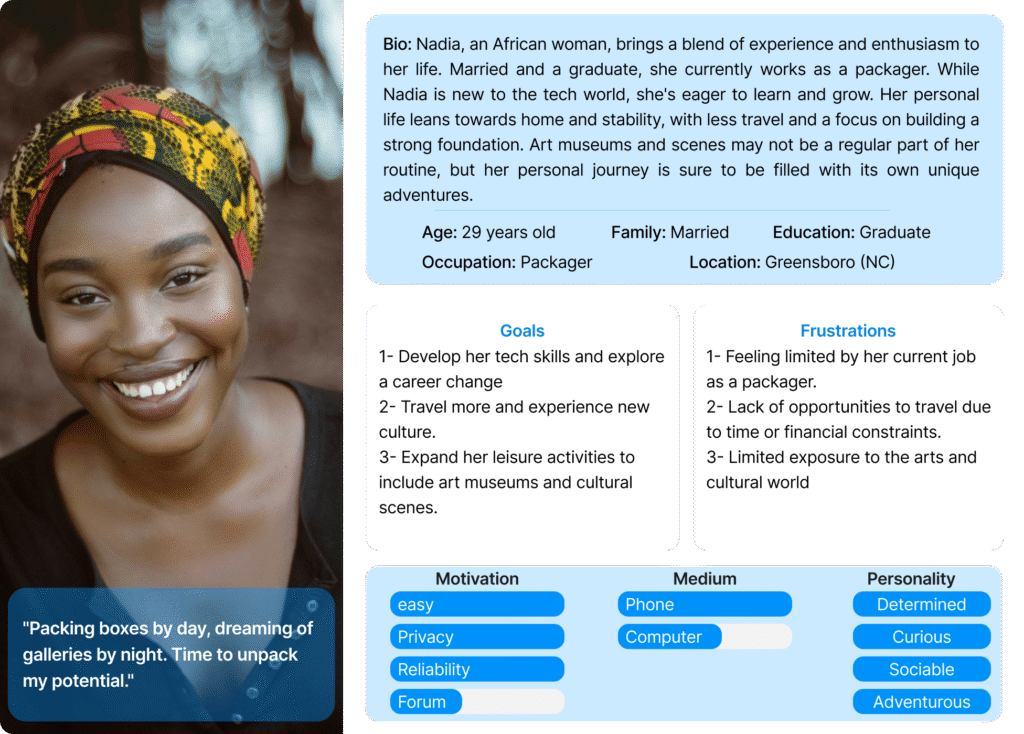
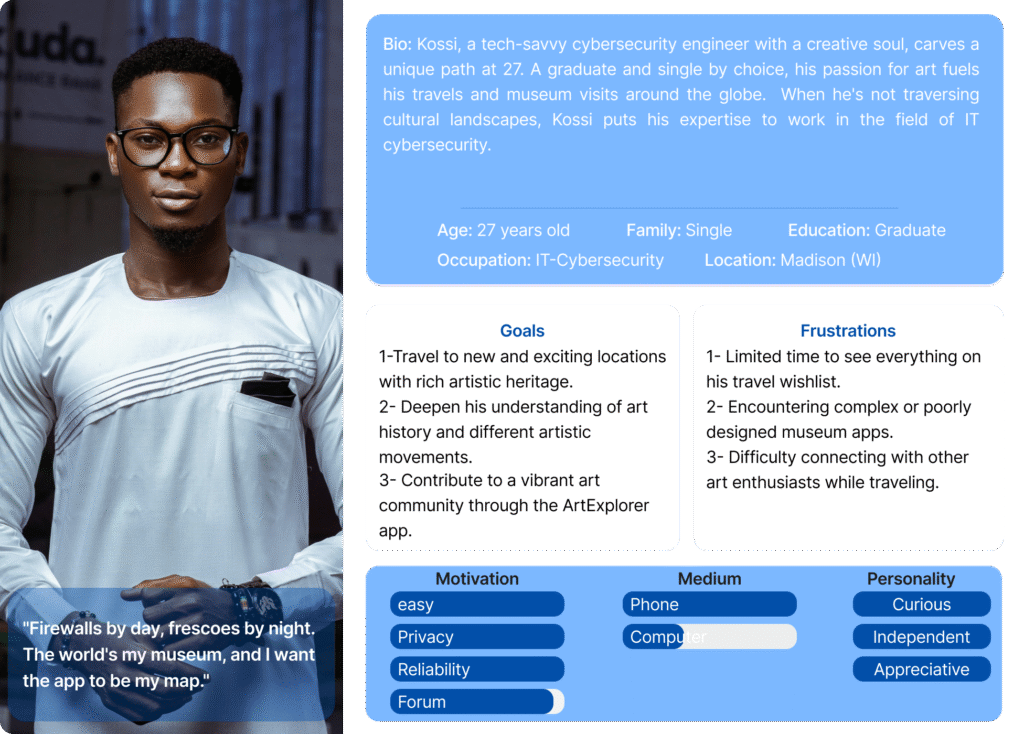
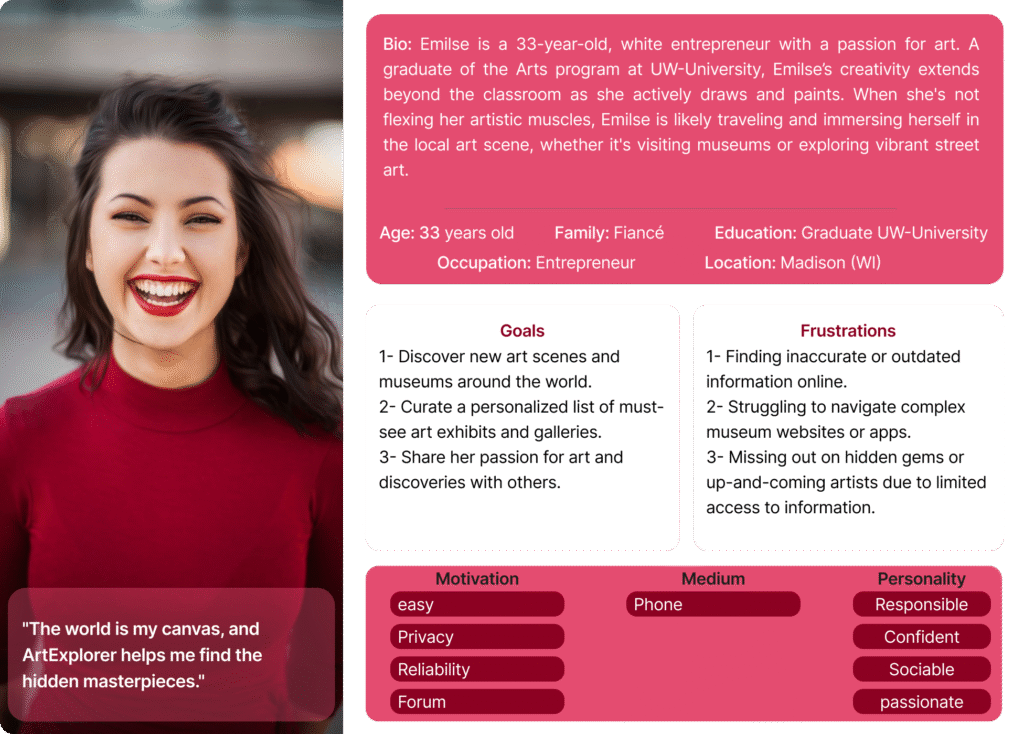
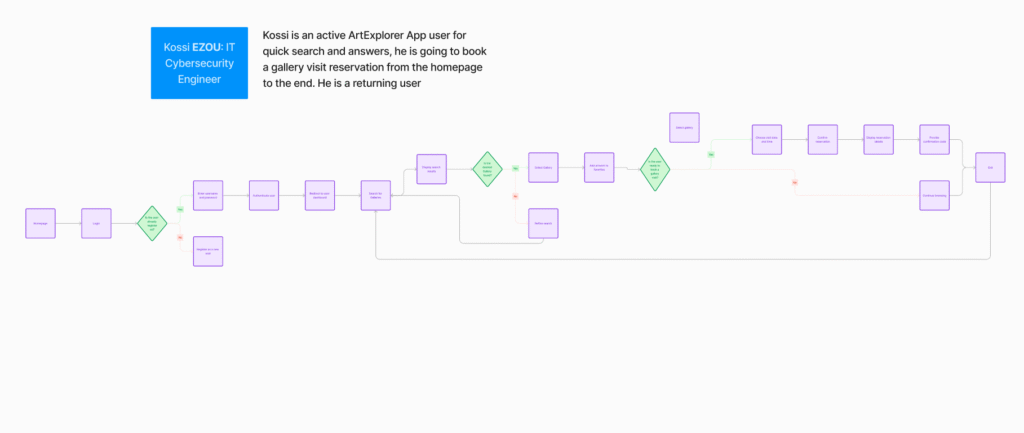
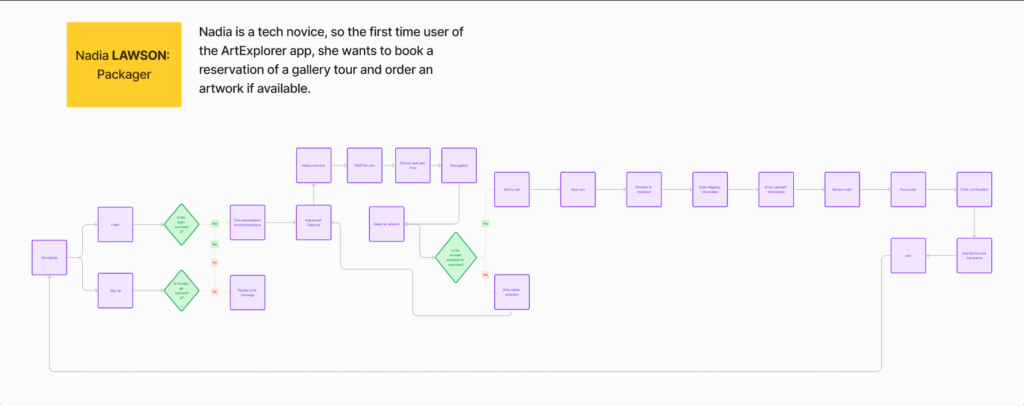
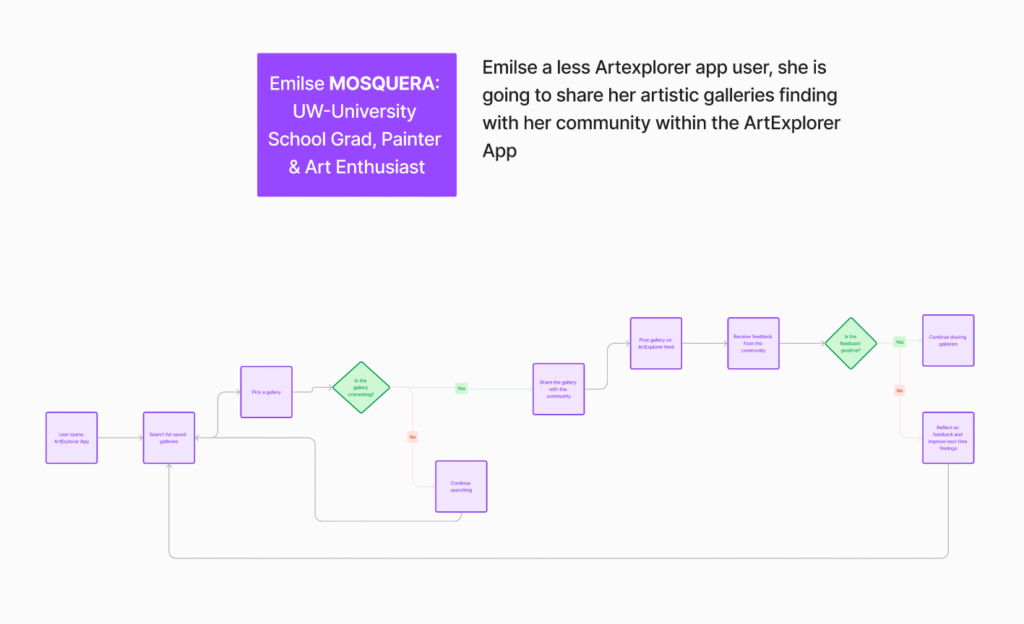
We used FigJam to quickly map and refine the ArtExplorer user flow, shaping an experience that feels smooth, intuitive, and easy to follow from start to finish.
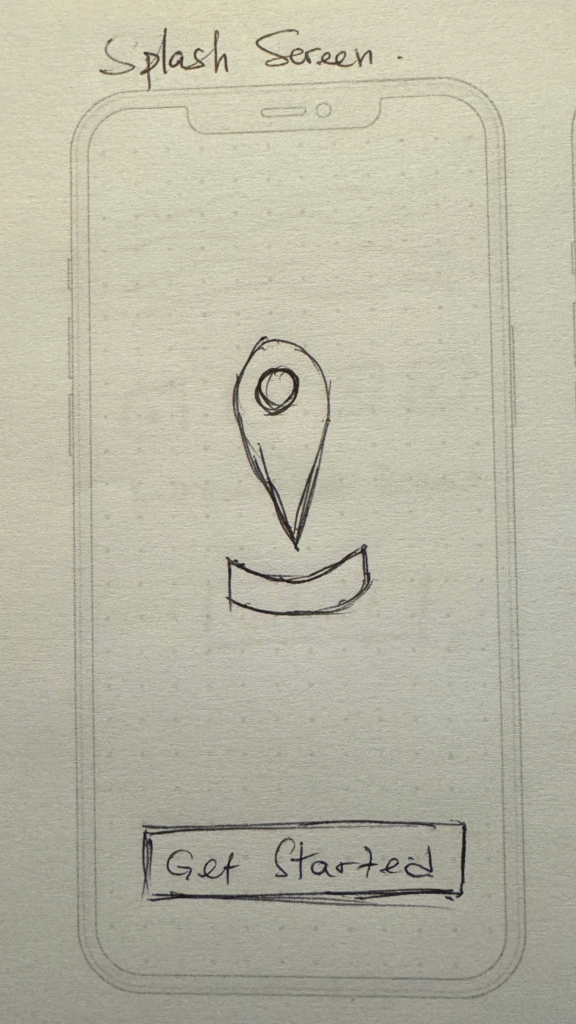
Hand-Drawn Sketches Wireframe
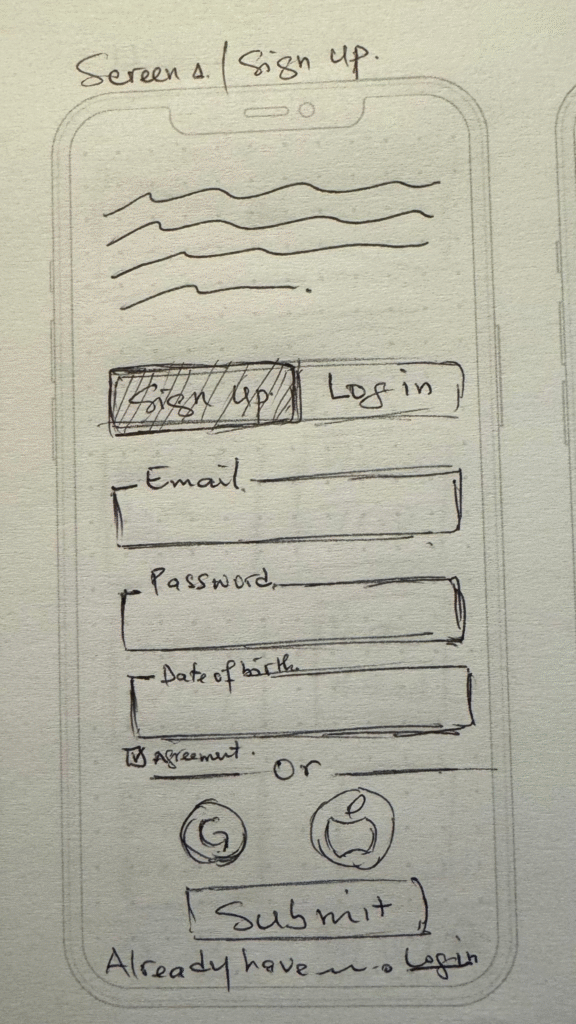
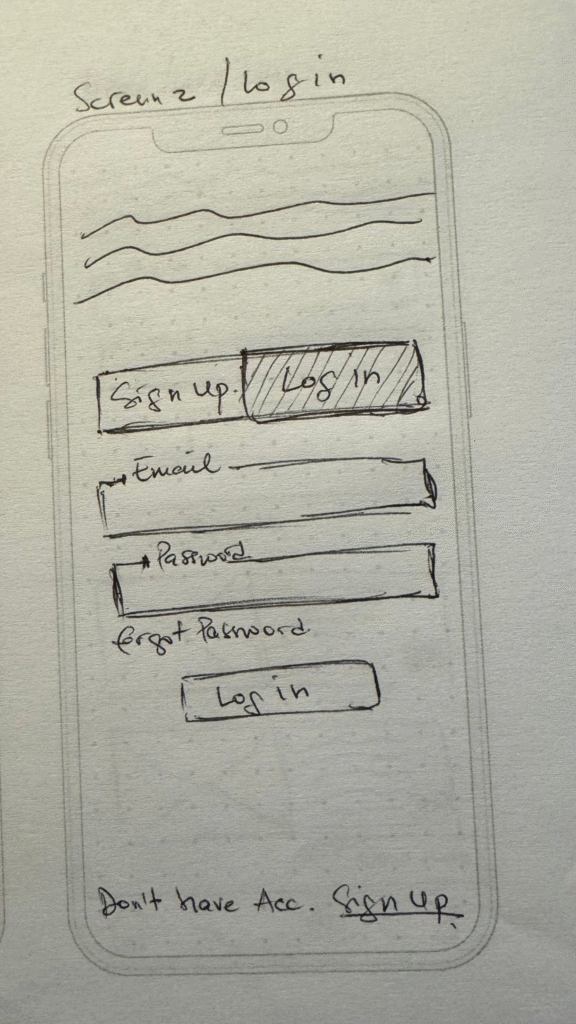
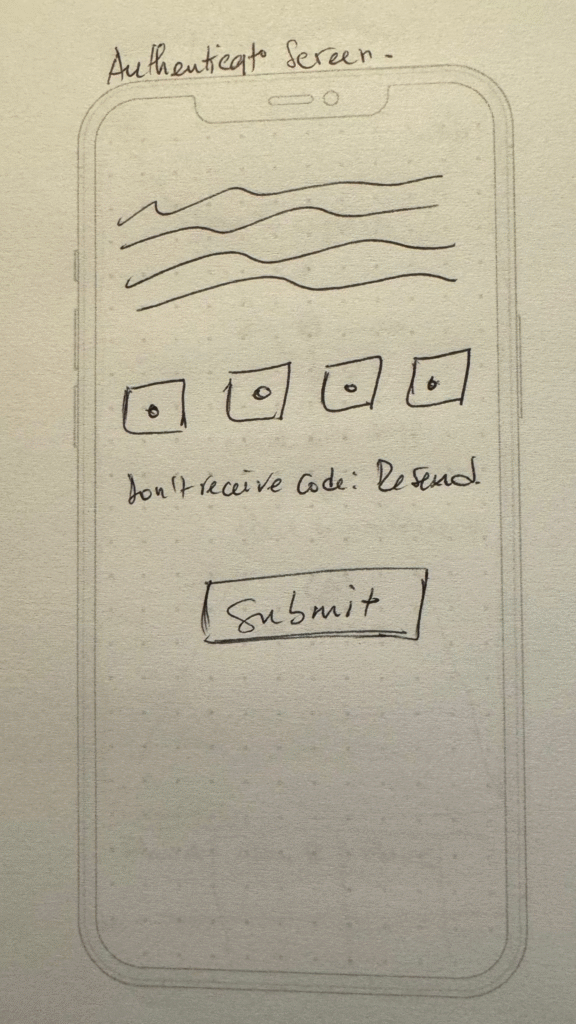
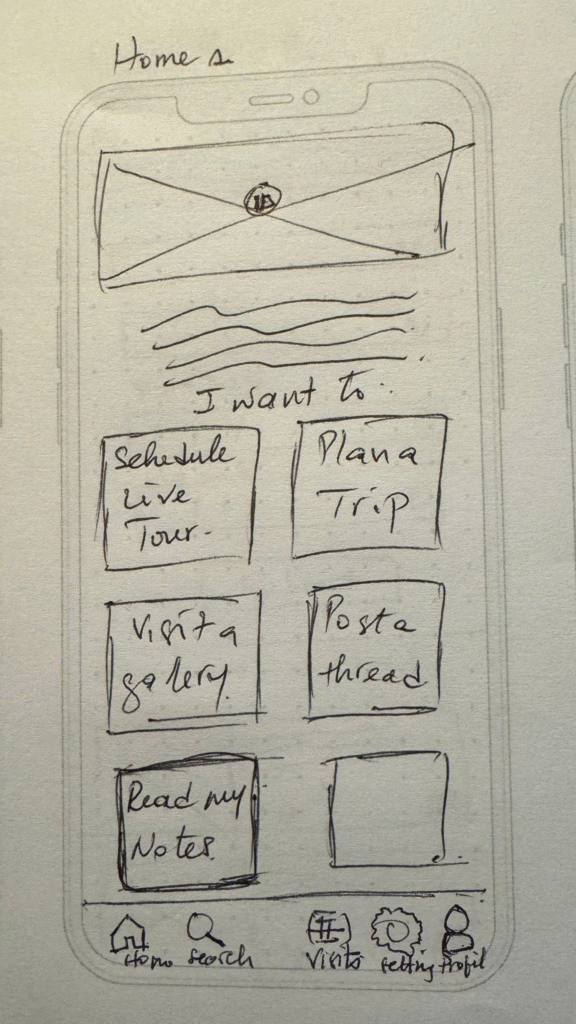
Digital Wireframe
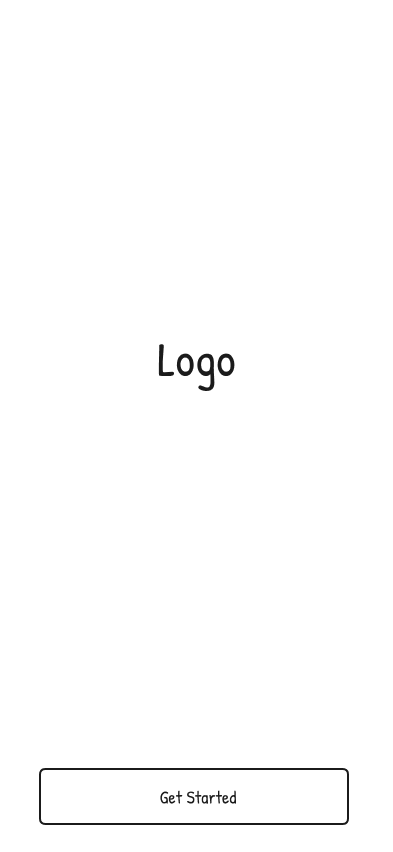
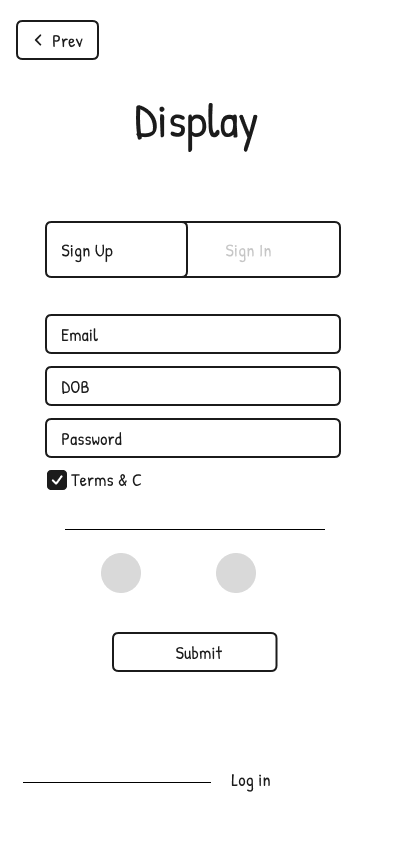
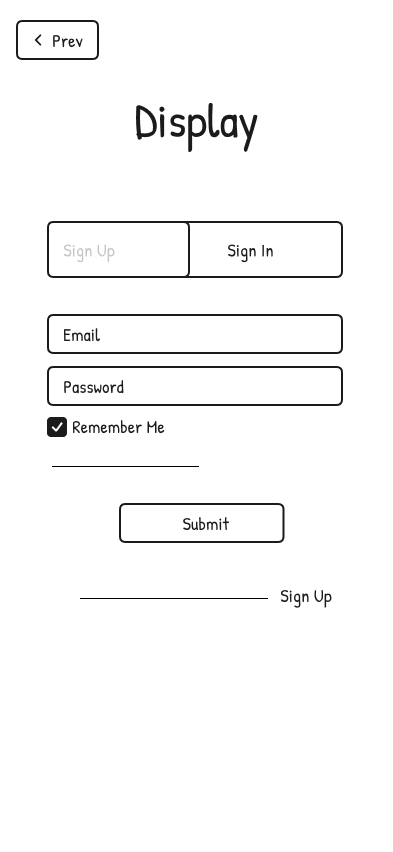
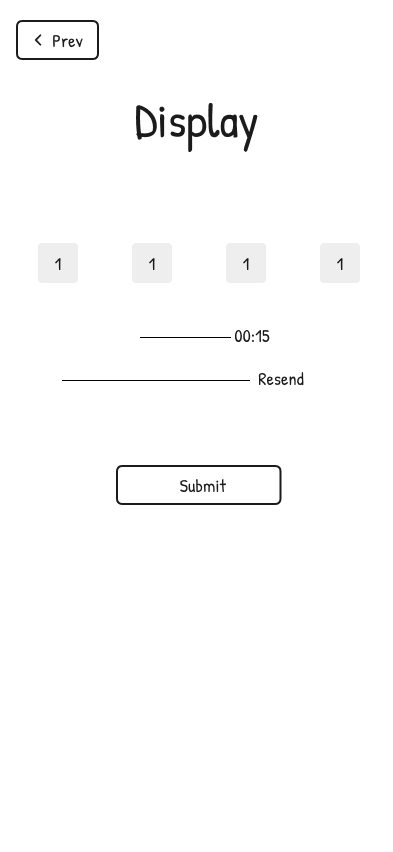
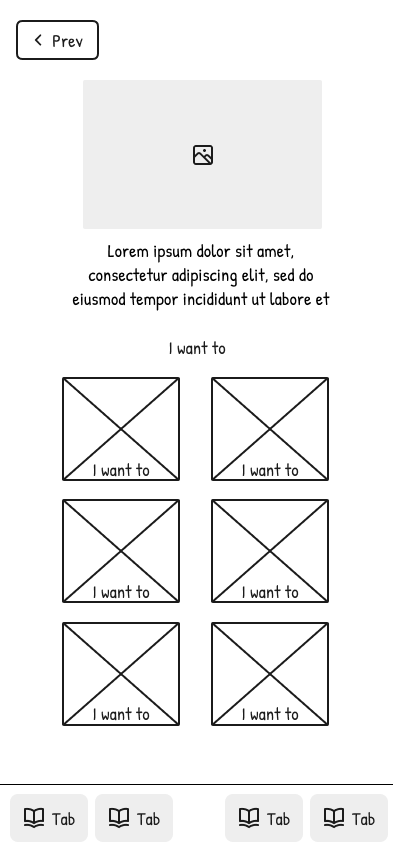
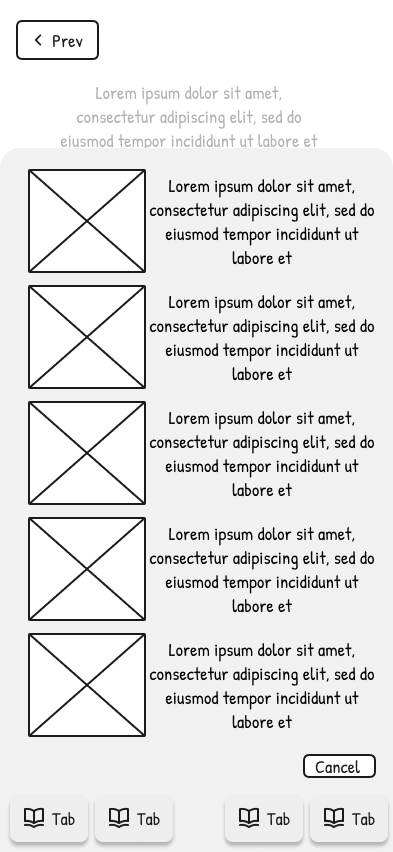
Digital Wireframe
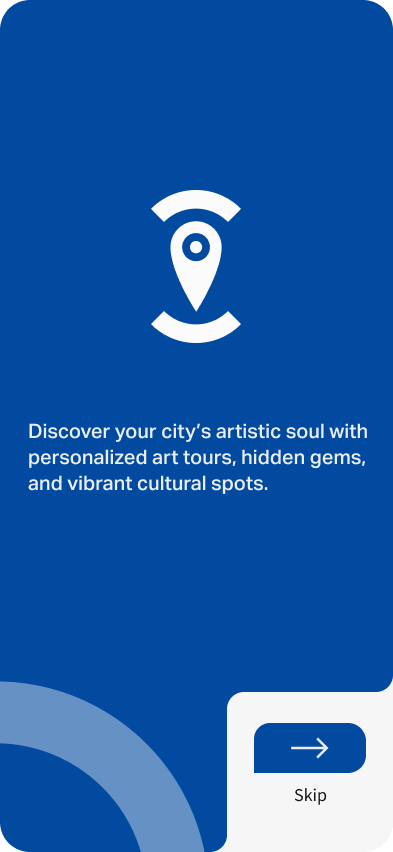
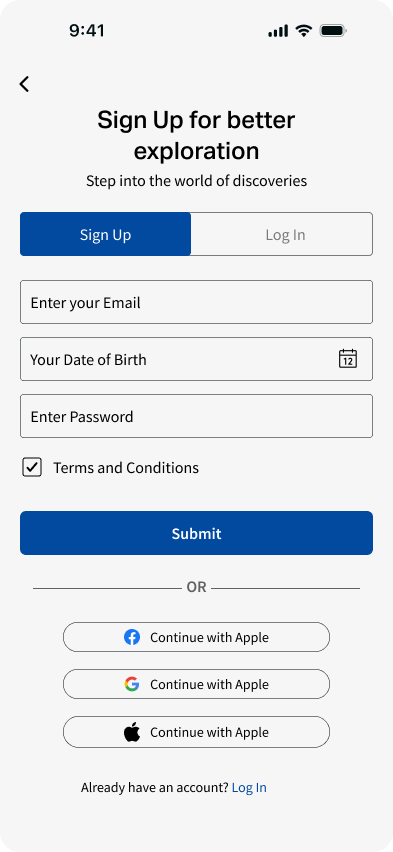
User needs drove everything—research, decisions, and final features were shaped directly by real behaviors and expectations.
Tech realities mattered—GPS accuracy, privacy, and multi-device compatibility influenced both design and scope.
Iteration was essential—prototyping, testing, and refining helped us remove friction and elevate the experience.
Collaboration fueled progress—FigJam and shared tools kept brainstorming fast, visual, and aligned.
User testing revealed the truth—watching real interactions surfaced pain points and guided smarter improvements.
Community features created value—reviews, shared journeys, and social interaction strengthened engagement and retention.
©2025. All Rights Reserved.